
If you have scoliosis, sideways curving of the spine, you may not experience any back pain, at least not yet. As you and your spine age, however, the effects of scoliosis can become significant. The lateral curve may increase and push the rib cage out, thereby restricting your breathing. The growing tightness and imbalance can also lead to neck, shoulder, back and hip pain. It is therefore important that you look after your spine in the best possible way. Yoga therapy for scoliosis offers specific and tailored practices that target the two sides of your spine separately. The aim is not to straighten the spine, as this is impossible in many cases, but to keep your spine in an optimal condition. If you look after your back well with the appropriate practices, you are more likely to prevent serious pain and restrictions in the future.
Yoga therapy for scoliosis is very specific, and should be tailored to your spine. Your spine may have one or two sideways spinal curves, and the effects on hips, ribcage, neck or back will be unique to you. Generally, the practices consist of strengthening the muscles of the convex side and releasing those on the concave side of your spine. This means that strengthening is as important as stretching.
Signs that you may have scoliosis
Because scoliosis doesn’t hurt initially, it’s easy to have it without knowing. To find out, stand in a natural way in front of a long mirror and observe if you have any of the following signs:
head tilted to one side
one shoulder higher than the other
one shoulder blade protruding
one arm longer than the other
one hip higher or more forward.

Yoga therapy for scoliosis: preventing pain
If we try our best to slow or even stop the progression of scoliosis, we can prevent the following consequences of this postural change:
Pain along the spine
The spinal vertebrae become compressed when they are not stacked evenly on top of each other. The uneven weight distribution can lead to muscle strain, nerve damage and arthritis.
Hip pain
Uneven hips, where one hip bone is higher than the other, cause scoliosis. But uneven hips can also be the result of scoliosis. In any case, the uneven weight distribution on the pelvis will cause hip pain sooner or later. On top of that, scoliosis often involves a spinal rotation, which causes the hips to twist slightly. When one hip bone is habitually forward of the other, the sacroiliac joints and ligaments are likely to become strained and painful. I have written more about SI pain here: https://beneyoga.co.uk/yoga-therapy-for-sacroiliac-joint-pain/.
difficulty breathing and suboptimal oxygenation of the blood
When the spine grows sideways, it pushes the ribcage out. This particular deformity of the rib cage is what we can see in the Hunchback of Notre Dame (from the book of Victor Hugo written in 1831, on which several movies and animations are based). This character is known for the hunch on one side of his back. His advanced scoliosis has pushed one side of the ribcage out, on the convex part of the spine. It is very different from kyphosis, a forward curving of the spine.
The distortion of the ribcage limits its free movement and leads to shallower breathing. Shallow breathing reduces oxygen intake and oxygen circulation in the blood. This affects all the cells in our body, but also our mental health. After all, rapid breathing signals to the brain that we are in a stressful situation. Without slow, easy breaths, the body and mind will struggle to truly relax.
Yoga therapy is not only beneficial for our posture and physical tightness, it can also enhance our ability to breathe deeply and freely. As a yoga therapist, I use breathing techniques to ease physical tension in the respiratory muscles, and to help people find a sense of inner peace. Our breath is the best tool to calm the body and the mind.
Yoga therapy for scoliosis: practices
Because yoga for scoliosis is so specific and particular for your back, it’s best to work one-to-one with a trained yoga therapist. If you would like more guidance, I teach in West London, UK, or via Zoom. Below, I describe some general movements that you can already start with. They are aimed to release your spine one side at a time and strengthen the weaker (convex) side. Because they release or strengthen the spinal muscles, these poses are also beneficial for people with mild back pain — just do side-plank on both sides if you don’t have scoliosis.
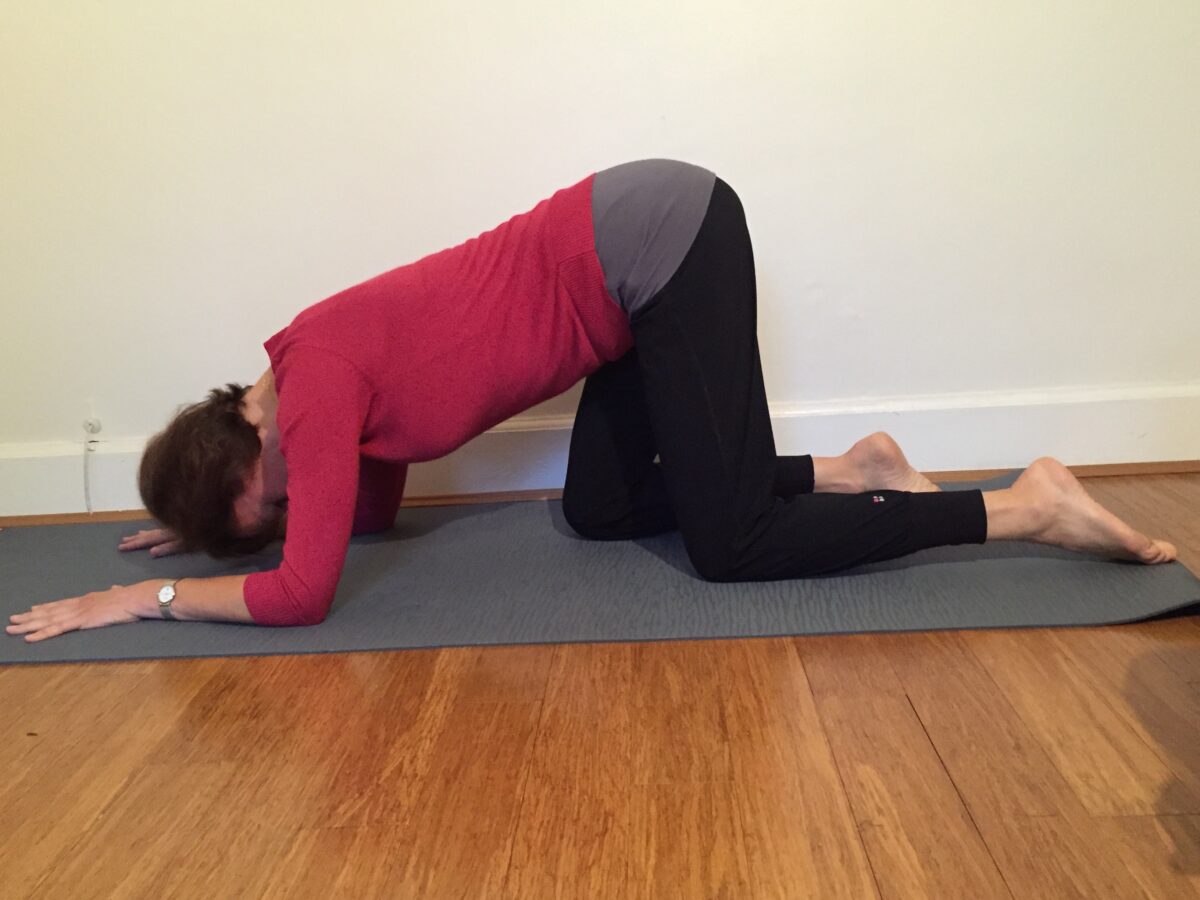
Asymmetrical all-fours movement
Start on all fours, hands underneath the shoulders and knees underneath the hips.
Place both hands further forward, about 15 cm or 5 inches in front of the shoulders and bring one knee a small step behind the other knee.
Exhale and bend both arms, lowering yourself onto the elbows. Keep the hips over the knees so that you don’t move backward.
Inhale and come up to the starting position.
Repeat this movement several times and then stay in the lower position for a few breaths, allowing the head to hang down so it can lengthen.
Half Side plank
Do this position only on the side of your spine that is weaker, i.e. the convex side, which curves outward. This is where the muscles are longer, less tight and weaker. This position can strengthen that side so that the muscles might straighten the convex side more. Do the pose on one side a few times a week, on the other (concave) side once a week, but stop practising this position if it gives you wrist or shoulder pain. If you are concerned about your balance in this pose, practise with a wall behind you.
Start by lying on your side, with the convex side down. Bend your legs and lift the trunk by leaning on the lower elbow.
Lift the lower side of your spine so your spine is straight. You can try to hang your spine and straighten it a few times to feel the difference. Work up to staying for a minute in the straight position.
Your upper arm can either rest on the side or stretch next to your head.
Releasing the tight side
After having done the side-plank on one side, turn on your back and stretch out the arm and leg on the other side, so the side that you did not practise the side plank on. Stay for 5 to 7 slow breaths. This stretches the tight (concave) side gently.
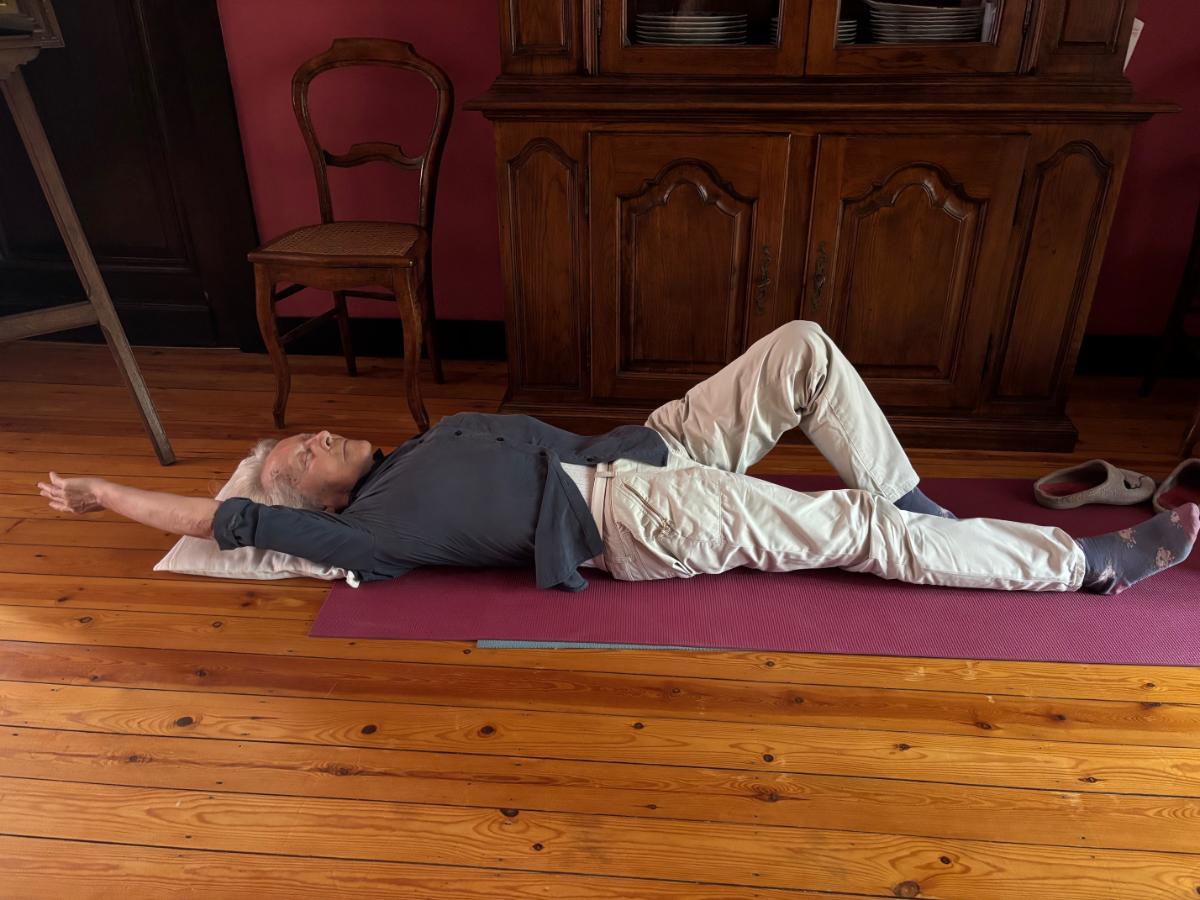
Supine leg and arm movement

This is an asymmetrical pose that is generally good for your back, but because it works asymmetrically it is also beneficial if you have scoliosis. Like the first movement, it gives each side of the spine the chance to lengthen independently. It stretches the hamstrings and relaxes the lower back.
Start lying on the back with the arms next to you and legs bent towards the chest.
Inhale and straighten one leg to the ceiling while bringing the opposite arm next to your ear.
Exhale and return to the starting position.
Do the same on the other side and repeat each side 4-8 times.
Do you have scoliosis and have you tried yoga? Please leave me a comment below! As always, don’t hesitate to book your free consultation call here: https://beneyoga.co.uk/book-a-free-consultation-call/
Namaste


Really helpful advice, thank you.
Hi Bene,
Love this blog. Three out of twenty stundents In my Friday morning yin class have Scoliosis. They all have fairly severe C curves. Two are in their 4o’s and one is in her 60s. I told them all about this article. So much good information. Thank you.
Thank you Evon, I am enjoying your blog about “February Gutsy Living” too: great advice on how to slow down and warm up. Just what we need in February.
All best wishes, Bene