
To find a person with a perfect posture is quite rare. Young children usually start with an effortless and beautiful posture. But then, life happens. Lack of confidence, genetics, injuries, holding patterns, imitating other postural habits, stress: there are many reasons why we lose a balanced posture. One gradual postural change is rounding the spine forward. This pattern is most noticeable in the upper back, and called kyphosis or hyper kyphosis. Yoga practices can often reverse it or at least prevent further deterioration. This blog about yoga therapy for kyphosis, a rounded upper back, examines some causes of this postural change, what a good posture consists of, and how you can look after your upper back with yoga.
Kyphosis, a rounded upper back
Structural causes
Kyphosis or hyper kyphosis is the medical term for the forward rounding of the upper spine. It can be mild or very severe, and develop in young or older people. Milder forms are usually the result of slouching habits, while severe kyphosis is more likely due to structural changes. One structural change in young people is called Ankylosing Spondylitis and is discussed in this blog. Severe structural changes in older people are often caused by crush fractures due to osteoporosis, low bone density. The fractures are more likely when there is already a rounded upper back present.
Daily Habits
Many people sit for long periods, hunched over a phone or computer, slouched in comfortable sofas or car seats. On the picture above, of the man working at his desk with his laptop way too low, it is clear to see how the spine functions as a whole. Notice how his upper back is rounded along with the middle and lower back. The neck arches more than usual in the opposite direction. Habitual sitting like this leads to a weak, probably painful back, and tight neck and chest muscles. The gradual rounding of the upper back can go unnoticed for a long time. After all, we usually don’t see how we look from the side, and the brain gets used to the spinal change, perceiving it as normal.
When we sit habitually in a slouched position, the rounded back compresses the front of the body, and in this way also the lungs, diaphragm and abdomen. As a result, breathing becomes less free, the digestion poor and abdominal muscles weak. Also energy levels may suffer.
Cultural bias
I haven’t studied this in depth, but I postulate that Western countries from the 1960s onwards have started to view sitting upright in a negative light. For many young and older people alike, sitting in a slouched way is synonymous with being cool and relaxed. Collectively, we haven’t make the connection yet with pain and spinal degeneration. I hope there is a generation growing up now that will wake up to the negative effects of slouching and mobile phone posture. Who knows, they might rebel against the previous generations and hold themselves more upright.
Psychological effects
Despite the cultural acceptance to slouch, we are still aware of body language, and the need to sit or stand upright in some situations. For example, in our age of informality, we do not slouch during a job interview. In this stressful situation, slouching would signal a lack of care or confidence.
In her interesting TED talk “your body language shapes who you are” https://www.ted.com/talks/amy_cuddy_your_body_language_may_shape_who_you_are, Amy Cuddy argues that posture affects our brain chemistry. Her research shows that an open, expansive posture does not only make us look confident but it also makes us feel more powerful. It even enables us to take more risks and have greater success! In fact, she advises everyone to go to a private place before a job interview and take a wide stance with legs and arms. While this would prepare you for success in a few minutes, hunching over your phone while waiting for the nerve-racking moment, gives the opposite result.

Emotional Causes
Apart from postural habits, there may also be emotional reasons for someone to adopt a slumped posture, such as shyness, low confidence or grief. I have written more about this connection in a previous blog: https://beneyoga.co.uk/posture-and-confidence/. These emotional causes, as well as simply being very tall when your peers are not, can all lead to kyphosis and potential problems when growing older.
Yoga does not only address the spinal changes but can, with time and a very mindful practice, also affect the subtle reasons that have led to poor posture. This is also where yoga therapy can work beneficially alongside some form of talking therapy.
Good posture
The well-meant but wrong advice to improve one’s posture is to lift the chest and pull the shoulders back. In fact, try doing that now and notice how your back muscles feel. Do you feel the effect along the spine and middle back?
A good standing posture starts with the feet grounded and the weight of the body equally balanced behind all the toes and the centre of the heels. It involves a good alignment of the centre of the hips over the ankles, and the centre of the shoulders over the hips. The ears are roughly in the same line, and the crown of the head ideally feels like it is ‘floating up’ towards the sky. A good posture further involves the whole spine and demands both strength and flexibility. That being so, together with strong upper back muscles, it is important to have released chest muscles, so that the shoulders are not being pulled forward. Finally, a good posture is supported by free breathing, but this is a topic for another time,
Because we are all individuals with unique bodies, we all have different tight areas. The practices below can help in releasing and strengthening the upper back, but they are generic, and only a beginning. If you would like to receive tailored help with your posture, do contact me by email or set up a free consultation session here: https://beneyoga.co.uk/book-a-free-consultation-call/.
As a way to begin exploring your upper back, the remainder of this blog shows you how to release the chest muscles with a stretch for the pectoral muscles. It also discusses a gentle cobra pose to strengthen the upper back.
Yoga therapy for kyphosis, a rounded upper back
Pectoral muscles stretch
Interlace your fingers behind your back, and place your hands palms up on your lower back.
Bend the arms, move the elbows closer to each other, and hold the position for 5 to 10 breaths.
If this stretch feels very tight, start by breathing out as you bring the elbows together and relax the position when you breathe in. Repeat a number of times before holding the stretch for a few breaths.

Cobra Pose: Bhujangasana
Cobra is often performed in a different way from the photograph below. Very often yoga students put weight on the hands and push the upper body as high as possible while looking up. There are at least 3 problems with doing cobra in this way:
It may increase or create neck tension.
You will underuse the upper back muscles.
The position may hurt the lower back.
This could be fine for flexible students with a pain-free back. Unfortunately, when your lower back feels tight or painful, performing cobra by putting weight on the arms and crunching the lower back is simply harmful.
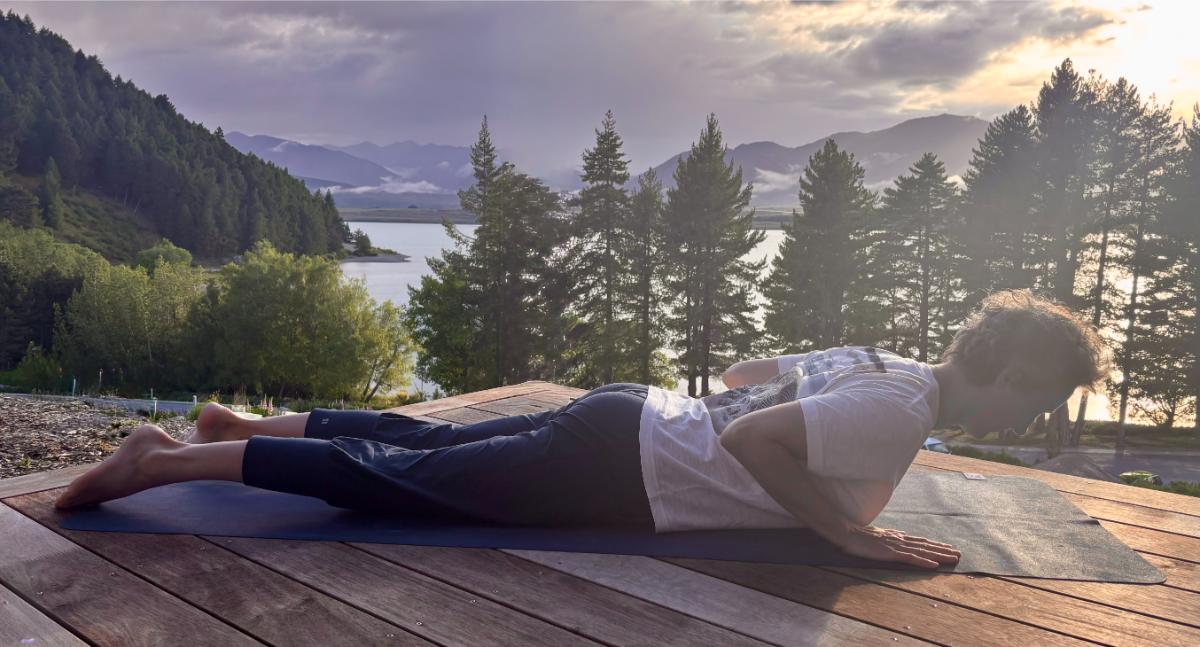
How to strengthen the upper back with Cobra Pose
Lie on your abdomen with the forehead on the mat and the hands underneath the shoulders.
Place your fingertips in line with the top of the shoulders.
Keep the elbows close to the body and soften the shoulders away from the ears. Stay for quite a few breaths in this position, breathing and allowing the hips and legs to get heavy.
Gently engage the legs and the lower abdominal muscles. This helps to anchor the lower body on the floor.
Raise the shoulders and head without putting weight on the arms and hands. Feel that your upper back muscles are doing the work, and not the arms or lower back.
Feel as if the upper spine and neck are lengthening forward and slightly up.
Keep looking down. Think of the back of your neck as long and crown of the head lengthening forward.
This isn’t a big movement; you may feel disappointed that you can’t come up very high. Nevertheless, it’s a very useful exercise if you want to strengthen the upper back.
Make sure that you don’t look up, Keep looking down to avoid performing this movement with only the neck.
You can inhale while moving up and exhale to lower the head down down. The lower back should neither hurt nor feel strained.
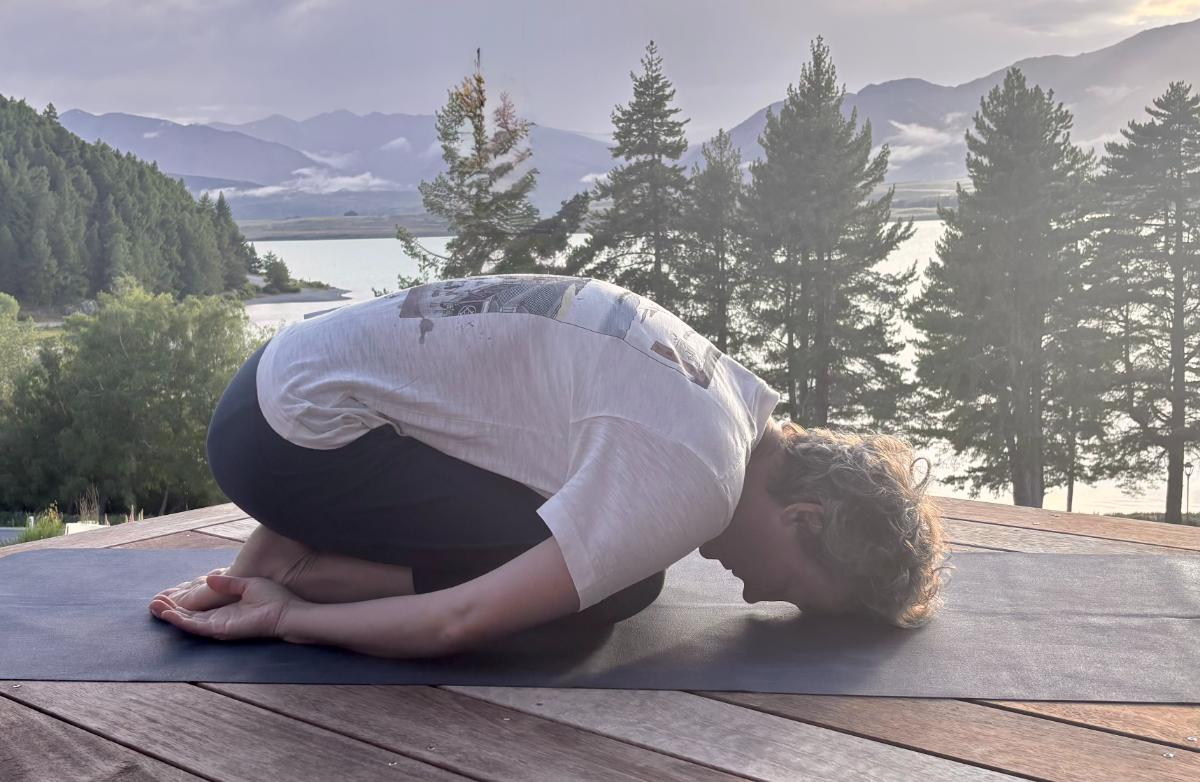
After cobra, rest for a few moments in child’s pose. Please don’t do child if you have recently had a herniated disc. The cobra itself may be a relief if you have sciatica as a result of a herniated disc. If you have sciatica, instead of going into child’s pose, just lie on your abdomen or back.
If your kyphosis is caused by sitting in a hunched way, have a look at this blog about stretches to do at your desk: https://beneyoga.co.uk/eight-ways-to-stretch-at-your-desk-when-you-wfh/.
Some passive releasing positions for the upper back are discussed in this blog:: https://beneyoga.co.uk/yoga-poses-my-kids-taking-back-to-uni/.
Namaste


