Among the myriad practices that over 50s are being told to do are core strengthening and balancing. Brushing teeth on one leg, for example, is presented as one way of getting the ever increasing recommendations into your day. It is true that balance practices and core work can help us remain strong, mobile and confident as we age. With this blog, I would like to explain how we can, and indeed should, combine core awareness with balancing practices. Our stability in daily life and in yoga balances can improve by gently engaging our core muscles together with the breath. So I would suggest giving it your whole attention, and leave the teeth brushing on one leg for another time.
If you feel unstable in daily life or in yoga balances, it is possible that your abdominal muscles are not engaging properly. Weak abdominals will fail to hold the trunk steady in static or dynamic yoga poses. As a result, you may feel wobbly and tire quickly. Even if you have done many abdominal workouts, your strong abs may have become too rigid to freely release and contract during movements. As explained in a previous blog, contracting the abdominal muscles all the time doesn’t make them stronger.
The core muscles include the abdominal muscles, some deep back muscles and muscles around the pelvis. Also the deep iliopsoas muscle and the diaphragm form part of the core muscles. For a healthy spine and core stability all these muscles have to work together. Core awareness, then, means attention to these various core muscles and how we can engage them with the breath.
My last blog discussed a practice to strengthen your core and back muscles in a balance on all fours. It taught you how your abdominal muscles keep your body stable in movement, and how to use the breath. It could be a good idea to first master those practices, then try the more challenging poses and movements below. In this blog we start with simpler practices that help us engage the abdominal muscles in static positions, then move on to dynamic ones. Enjoy, and as usual, skip anything that hurts.
If you would like to work with me on balancing and core strength, you can book a free consultation call here.
How to combine core awareness with balancing
Plank pose
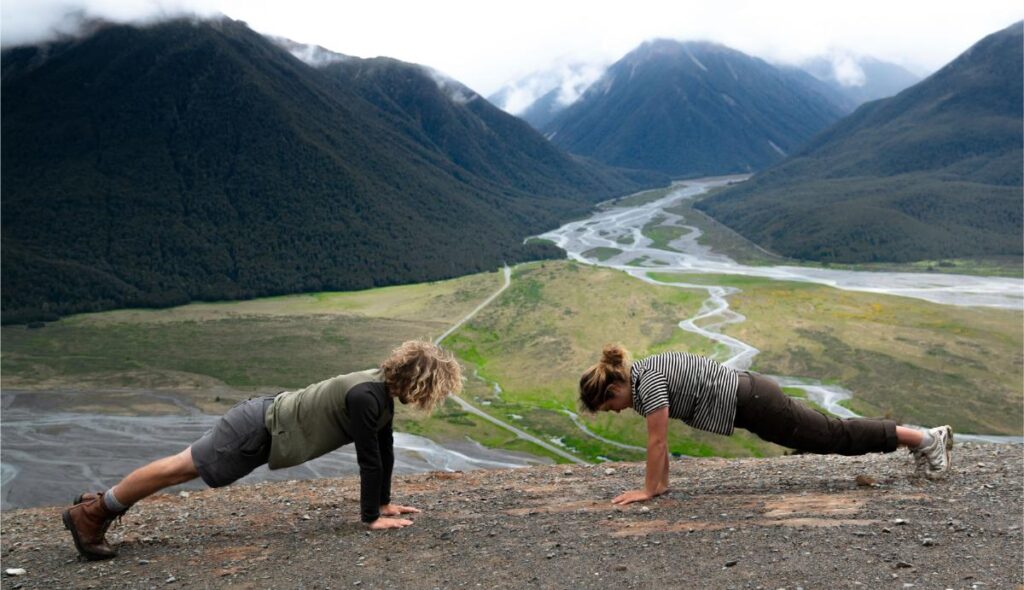
This pose is an efficient core strengthener because of the way the abdominals have to stabilise the trunk and hold the body in line against the pull of gravity. It is more challenging for the abdominal muscles than crunches. If the full pose is too daunting for you at the moment, stick to the first two preparatory steps.
Start on all fours: contract the abdominal muscles strongly while you exhale, and relax them when you breathe in. Notice how this stronger action of the abdominal muscles helps to hold the trunk stable: it prevents the lower back from sinking down.
Place the hands a step forward and bring the shoulders over the wrists. You should now be in a half plank, with the body held in a straight line from the shoulders to the knees. Repeat the breathing and abdominal muscle action as in the last stage.
Finally, if your arms, wrists and back allow it, raise your knees and place the feet so that the whole body is in one line. Again, exhaling while contracting the abdominal muscles strongly helps to keep the lower back safe and train the core.
Tree pose
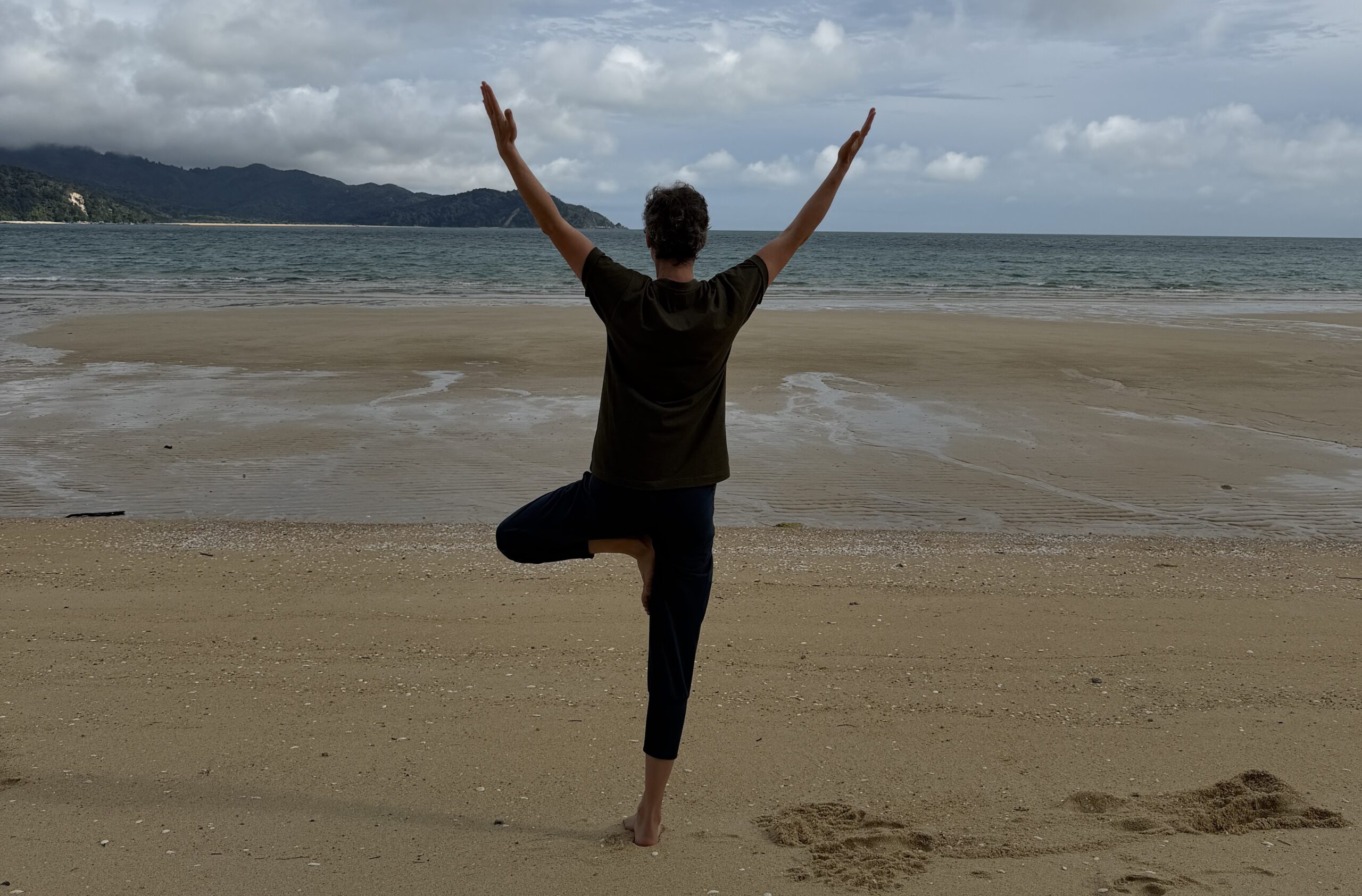
Start by standing on two feet. Slowly shift the weight over the left foot and lift the right heel. Stay for a few breaths until you feel stable enough to lift the right foot.
Place the right foot either below or above the left knee, never against the kneecap.
Keep the whole left side of the body long, grounding through your foot and lengthening up from the waist. This ensures that you don’t bend into your left hip but that both sides of the body stay elongated.
Square the two hipbones forward, so the spine is aligned and not twisted.
Exhale, contract the abdominal muscles gently and feel how this action supports your stability. The breath and the core muscles help to keep the pelvis in the right place, and prevent it from tilting forward or backward too much.
Keep gently contracting the abdominal muscles when you breathe out, and relaxing them while breathing in.
Hold for as long as the position is comfortable and repeat with the other leg.
Warrior lunge
Stand near a chair or wall if balancing is tricky.
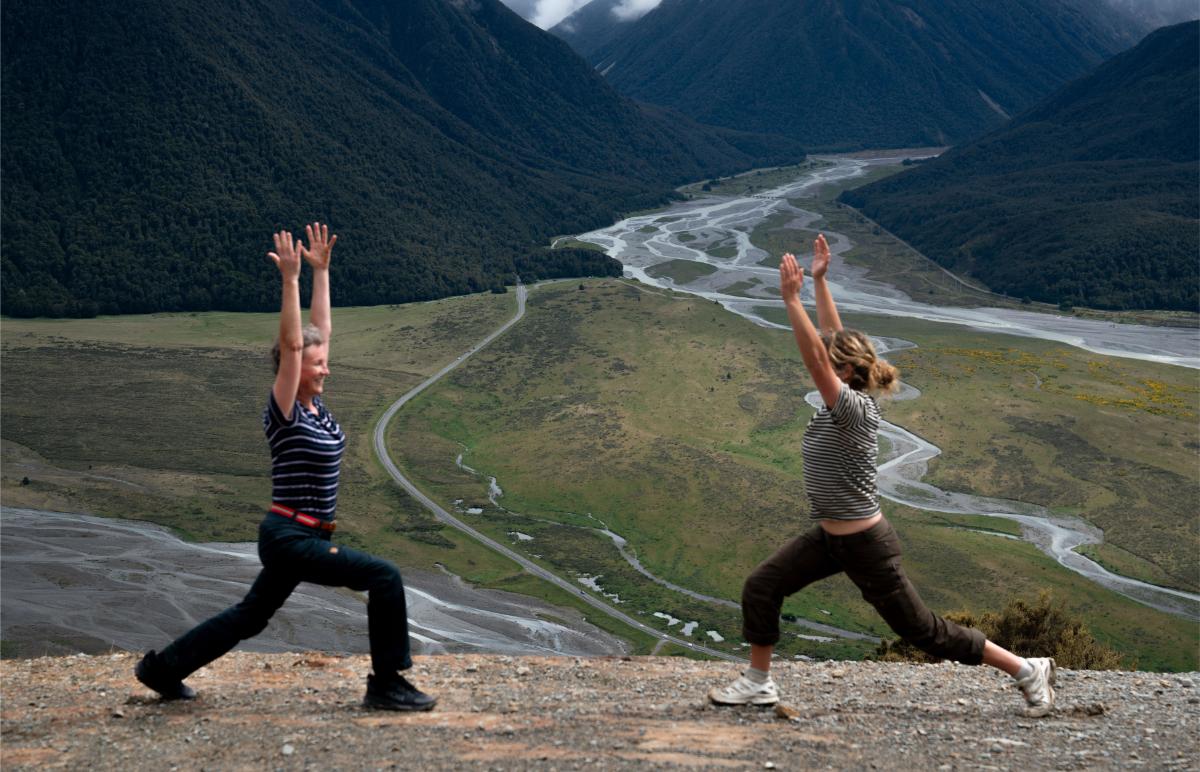
Move the left foot a good step back, with the heel lifted so you rest on the toes. The front leg is bent with the knee positioned just above the ankle.
The hip bones and all toes are facing forward. This precise alignment is important for the integrity of the ankle, knee, pelvis and lower back.
Raise both arms but keep the shoulders relaxed.
Again, use the breath and the abdominals to hold the pelvis and lower back in a safe place. This means you don’t flatten or overly arch your lower back. Exhale and gently engage the abs, inhale and relax them.
Hold for up to a minute and repeat on the other side.
Warrior balance sequence
While the previous poses were meant to teach the abdominals how to keep the trunk stable and the back supported in static poses, this sequence will challenge the core muscles to assist you in movement.
Unless you feel confident in balances, please practise near a wall or chair to avoid falling.
Start with 2 feet hip-width apart.
Inhale and lift the left knee to wherever comfortable and not higher than hip level.

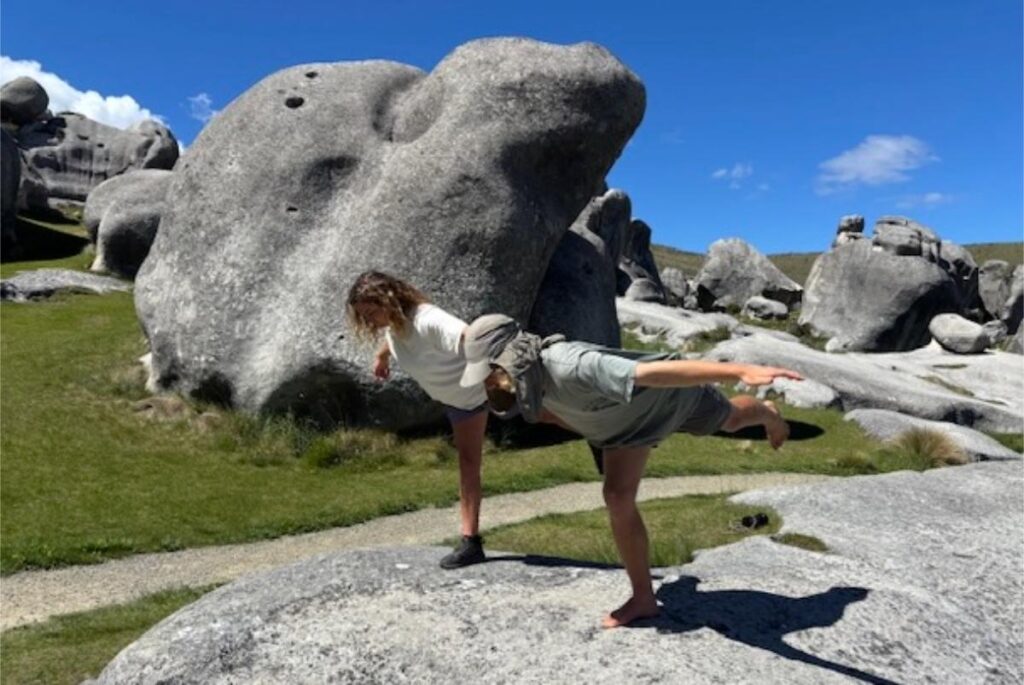
Exhale, contract the abdominals and move the left leg behind. The body and left leg remain in one line, whether this is diagonally or horizontally. Practise the diagonal position (as pictured below) first before perhaps trying to bring the left leg and body parallel to the floor. Also, don’t allow the leg to move higher than the hips and keep the hip bones facing down to the floor.

Inhale and return the left leg to the first position.
Repeat 4 times if comfortable with one leg and then 4x with the other leg.
If the balance with the leg behind you feels comfortable, stay in it for a few breaths, focusing on keeping the spine long and on the same breathing pattern: exhaling to gently contract the abdominal muscles and inhaling to release them slightly.
This position is called the warrior balance, or warrior 3. Instead of the classic version with the arms stretched out in front, I prefer the arms to the side for a better balance, and to prevent shoulder tightness.
Namaste